

This document sets out the basis on which Alpha Link LLP (“ALL” or “we”) will agree to provide services to our clients. Accordingly, if you decide to retain ALL as your legal counsel, our agreement will be as set out below (“our Agreement”).
ALL’s Fees for Services Rendered
Under our Agreement, we will charge you a fee for our services that will be determined in a manner that is consistent with the Law Society of Upper Canada rules, and that will represent a fair and reasonable fee, based on a number of factors, including but not limited to the time and effort involved, the complexity of the matter, the amounts in issue, the overall results obtained, and the degree to which special skills and expertise are involved in dealing with the matter.
In addition to our fees, we will charge you for any disbursements which we incur on your behalf, as well as all applicable GST – which may apply to both fees and disbursements.
Where we choose to base our fee entirely on the time spent, please be advised that our hourly rates currently range from $175 per hour for our most junior associates, to $650 for our most senior partners.
Where appropriate, we attempt to have junior lawyers involved, on a supervised basis, so that the most cost effective service can be provided. If you have particular requirements in this regard, you will raise these with us at the outset of our Agreement.
Retainer Policy
ALL’s usual policy to request a retainer in advance from all new clients, and in respect of any matters where it is likely that substantial services will be required to be provided. ALL will base the amount of any retainer requested on our estimate of the time and effort that will be initially required to deal with the preliminary aspects of any particular matter. Where appropriate, we may notify you and request that the retainer amount be further replenished, which may be required before additional steps are taken by us, and we reserve the right under our Agreement to cease all work on your file until such a replenishment has been made.
Where ALL requests a retainer from you, the provision of that retainer by you to us shall constitute your acceptance of our Agreement. Where we choose not to require a retainer in advance for our services to you, the provision by you of any information or documentation to us shall constitute your acceptance of our Agreement.
Statements of Account & Unpaid Balances
Statements of Account will be issued to you periodically throughout the term of our engagement, and are payable upon receipt. To the extent retainer funds are held by us in trust at the time the Statements of Account are issued, those funds will be applied directly to the Statements of Account. Any balance remaining unpaid more than thirty days after the Statement date will bear interest from the Statement date to the date of payment, currently at the rate of 1% per month.

If your account with us remains outstanding for a period of 15 days from date of issuance, we reserve the right under our Agreement to cease all work on your file.
Legal Services Provided to You
As client of ALL, you can expect that our legal services will be performed on a professional and competent basis, and in a timely manner. If you have particular requirements in this regard, you will raise these with us at the outset of our Agreement, so that the appropriate resources can be directed to your particular needs.
We reserve the right to determine how the legal services provided to you are performed, and by whom they are performed.
If you are a non-resident of Canada, and should it become necessary for us to visit you or your facilities outside of Canada, you agree that the purpose of our visits shall be to obtain information only, and that as Canadian counsel, all of our legal services will be performed in Canada.
Other
Our Agreement constitutes the entire agreement between us and supersedes all prior agreements, understandings, negotiations and discussions, whether written or oral.

No amendment or waiver of any provision of our Agreement shall be binding on either of us unless consented to in writing by both of us.
Our Agreement shall be governed by and construed in accordance with the laws of the Province of Ontario and the federal laws of Canada applicable therein.
In the event you feel the need to bring suit against us, you agree to bring such suit in the Ontario Courts.



 This year, “National I Love My Lawyer Day” falls on Friday, November 2. On this day, not only is lawyer bashing a big no-no and considered in poor taste, but the public is also asked to take a few minutes out of their day to let their lawyers know how much they love and appreciate them. “Call your lawyer and say happy lawyer’s day or thanks for a great job, or even send him or her a gift or flowers,” Anise said. “Lawyers are always painted as the bad guy, even when they do their job well. We’re hoping this day will spark public interest in commending lawyers rather than condemning them.” “This is a personal crusade,” Anise added.
  ALPIA is a national organization committed to promoting a positive public image of lawyers. Its most recent battle was against NBC television in which ALPIA played a leading role in running the show First Years off the air. NBC featured ALPIA repeatedly in promos during primetime and also during Access Hollywood. ALPIA’s founder and National President, Nader Anise, has gained national media attention due to the controversial nature of his crusade.
 In In re Campbell, 13 Fla. Law W. Fed. B183 (Bankr. M.D. Fla. 2000), debtor filed an objection to creditor’s motion to compel production of documents filed against debtor’s counsel. Debtor asserted the attorney-client privilege, attorney work product. The Creditor alleged that non-exempt assets were converted to exempt assets with the intent to hinder, delay or defraud creditor and the privilege fails under the crime-fraud exception to the privilege. Id.





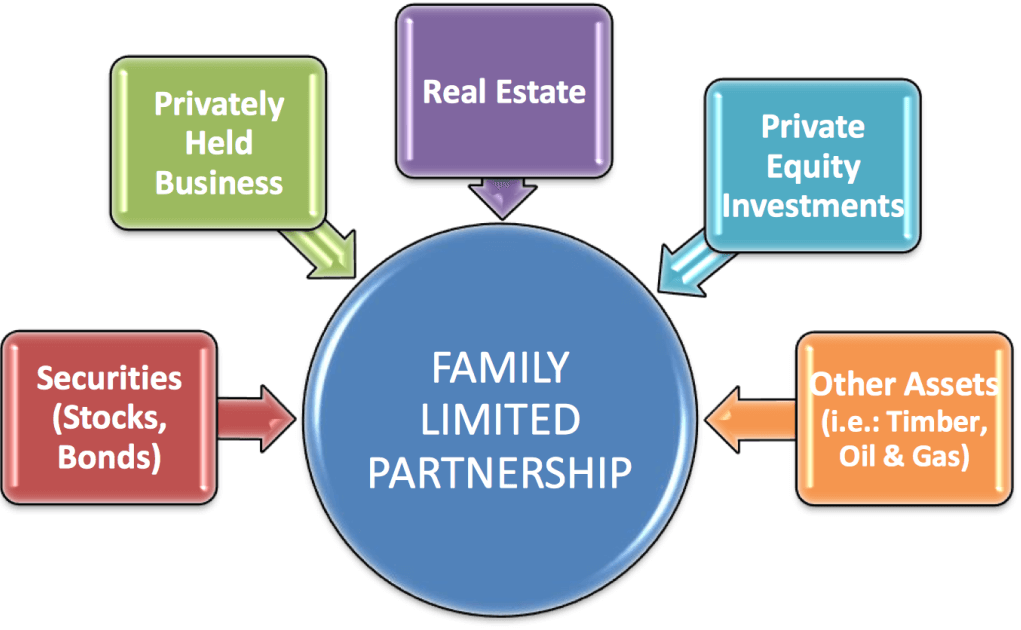
 There has been much interest in Family Limited Partnerships recently as reflected by the number of articles appearing on this topic, some of which include: Tucker and Mancini, “Family Limited Partnerships and Asset Protection” 23 Journal of Real Estate Tax 183 (Spring, 1996); Willms, “Drafting Tips to Obtain Maximum Tax Savings From Family Limited Partnerships” 24 Taxation for Lawyers 196 (January/February, 1996); Weiner and Leipzig, “Family limited Partnerships Can Leverage the Annual Exclusion and Unified Credit” 82 Journal of Taxation 164 (March, 1995); Jones, “Family Limited Partnerships Achieve Tax and Non-Tax Goals” 23 Taxation for Lawyers (January/February, 1995); Mulligan and Braly, “Family Limited Partnerships Can Create Discounts” Vol. 21 No. 4 Estate Planning (July/August, 1994); Henkel, “How Family Limited Partnerships Can Protect Assets” 20 Estate Planning 3 (January/February, 1993); and Soloman and Saret “Asset Protection Strategies: Tax and Legal Strategies,” Wiley Law Publications (1993).
 The use of family limited partnerships as a tool for asset protection planning is incidental to its use for estate tax, income tax and succession planning. Although beyond the scope of this outline, the benefits of family limited partnerships include, income shifting (primarily for children over 14), retention of control by senior family members and possible death tax savings through the use of valuation discounts. The valuation discounts may be unavailable upon death if the creator of the partnership retained control as a general partner until his or her death. This issue does not appear to be clearly addressed at this time. See: Mulligan and Braly, supra and Spero, Chapter 8. supra.
 The trend is to permit larger discounts. See Scanlan Estate v. Comm’r. TC Memo 1996-331 (7/24/96) where the court allowed a 30% discount from the actual price stock was sold at 9 months after the decedent’s estate tax return was filed to reflect: passage of time; change in market conditions; marketability discount and minority discount. Even though a redemption of decedent’s stock occurred 2 years after decedent’s date of death, the court stated the redemption price was the best available evidence of the stocks’ value. Accordingly, the court applied the above-mentioned 30% discount to the actual redemption price recovered just 2 years after the decedent’s date of death.